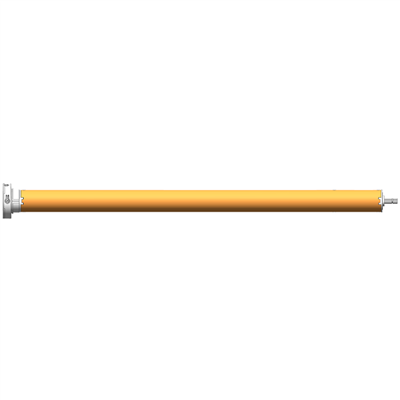
In modern automation equipment, tubular motors are widely used in curtains, sunshade systems, industrial rolling doors and other fields due to their compact structure and efficient performance. As a core component, the material of the tubular motor directly affects its durability, operating efficiency and service life. Understanding its main materials will help buyers and end users to better choose suitable products.
The casing of the tubular motor is usually made of high-strength aluminum alloy or galvanized steel sheet. Aluminum alloy has the characteristics of light weight, good heat dissipation and strong corrosion resistance, and is suitable for scenes with high requirements for weight and weather resistance. Galvanized steel sheet is often used in price-sensitive applications but requires a certain degree of durability due to its low cost and high mechanical strength. The choice of casing material needs to comprehensively consider the use environment, such as whether it is exposed to moisture, high temperature or corrosive gas.
The stator and rotor parts inside the motor are mostly made of high-quality silicon steel sheets. Silicon steel sheets have the characteristics of high magnetic permeability and low iron loss, which can effectively reduce energy loss and improve motor efficiency. At the same time, the laminated structure of silicon steel sheets helps to reduce eddy current loss and ensure that the motor maintains stable performance during long-term operation.
The winding coil is the core conductive component of the motor, usually wound with high-purity copper wire. Copper has excellent conductivity and can reduce the heat generated when current passes through, thereby improving the energy efficiency and service life of the motor. Some high-end products may use tin-plated or silver-plated copper wire to enhance oxidation resistance and welding performance, and adapt to more stringent working environments.
Bearings are key components that support the motor shaft, and are generally made of stainless steel or ceramic. Stainless steel bearings have good corrosion resistance and load-bearing capacity and are suitable for ordinary environments; while ceramic bearings are often used in high-end or high-speed tubular motors due to their high temperature resistance, low friction coefficient and long life.
Sealing materials are mostly made of rubber or silicone to prevent dust and moisture from entering the motor. High-quality sealing materials can significantly improve the protection level of the motor and ensure its stable operation in outdoor or humid environments.
The material selection of the tubular motor directly affects its performance and reliability. When purchasing, it is necessary to comprehensively consider the durability, cost and performance requirements of the material according to the specific application scenario to ensure the long-term and stable operation of the motor.