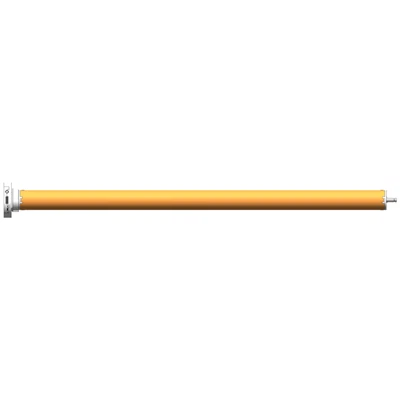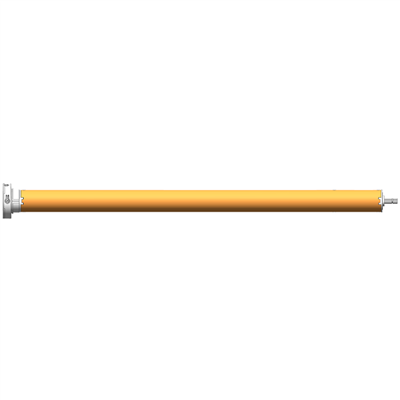
What is the maximum torque of a DC tubular motor?
As a supplier of DC tubular motors, I've encountered numerous inquiries regarding the maximum torque of these motors. Torque is a fundamental concept in the world of motors, and understanding it is crucial for selecting the right DC tubular motor for specific applications. In this blog, I'll delve into the topic of the maximum torque of DC tubular motors, exploring what it means, how it's determined, and why it matters.
Understanding Torque
Torque can be thought of as the rotational force that a motor can exert. It's what enables the motor to turn a shaft or drive a load. In the context of DC tubular motors, torque is essential for tasks such as opening and closing blinds, curtains, or rolling shutters. The greater the torque, the more weight or resistance the motor can handle.
Mathematically, torque (T) is calculated as the product of the force (F) applied perpendicular to the radius (r) from the axis of rotation. The formula is T = F × r. In a DC tubular motor, the force is generated by the interaction between the magnetic field and the electric current in the motor's windings.


Factors Affecting the Maximum Torque of a DC Tubular Motor
Several factors influence the maximum torque that a DC tubular motor can produce.
- Motor Design and Construction
- The number of windings in the motor's armature plays a significant role. More windings generally result in a stronger magnetic field, which can generate more torque. For example, motors with a higher number of turns in the coils can produce greater forces when an electric current passes through them.
- The quality of the magnetic materials used in the motor also affects torque. High - quality permanent magnets or well - designed electromagnets can create a more powerful magnetic field, leading to increased torque output.
- Power Supply
- The voltage and current supplied to the motor are crucial. A higher voltage can increase the current flowing through the motor's windings, which in turn can increase the magnetic force and thus the torque. However, there are limits to how much voltage and current a motor can handle safely. Exceeding these limits can damage the motor.
- The type of power supply, whether it is a constant - voltage or constant - current source, can also impact the motor's torque characteristics.
- Load Characteristics
- The nature of the load connected to the motor affects the maximum torque required. For instance, if a DC tubular motor is used to lift a heavy curtain, it needs to generate enough torque to overcome the gravitational force acting on the curtain. If the load has a high inertia, such as a large, heavy roller shutter, the motor needs to be able to provide sufficient torque to start and stop the movement smoothly.
Determining the Maximum Torque of Our DC Tubular Motors
At our company, we use a combination of theoretical calculations and practical testing to determine the maximum torque of our DC tubular motors.
Theoretical calculations are based on the motor's electrical and magnetic properties. We use equations from electromagnetic theory to estimate the torque based on factors such as the number of turns in the windings, the magnetic field strength, and the current flowing through the motor.
Practical testing involves running the motor under different load conditions and measuring the torque output. We use specialized torque sensors to accurately measure the torque at various points during the motor's operation. This data is then used to determine the maximum torque that the motor can safely and reliably produce.
Maximum Torque in Different Applications
The required maximum torque varies depending on the application of the DC tubular motor.
- Residential Blinds and Curtains
- For small to medium - sized residential blinds and curtains, a DC tubular motor with a relatively low maximum torque may be sufficient. These motors typically need to handle the weight of lightweight fabric and the friction in the curtain or blind mechanism. Motors with a maximum torque in the range of a few Newton - meters (Nm) are often used. For example, our 25mm Standard Tubular Motor is well - suited for such applications, providing just the right amount of torque for smooth operation.
- Commercial and Industrial Rolling Shutters
- In commercial and industrial settings, where rolling shutters are often larger and heavier, a DC tubular motor with a higher maximum torque is required. These motors need to be able to lift and lower heavy metal or composite shutters against gravity and overcome significant friction in the guide rails. Motors with maximum torques of tens of Newton - meters or more may be necessary. Our 25mm Smart Electronic Radio Tubular Motor offers enhanced torque capabilities, making it suitable for more demanding commercial applications.
- Battery - Powered Applications
- When it comes to battery - powered DC tubular motors, such as our 25mm Battery Electronic Radio Tubular Motor, the maximum torque is also an important consideration. These motors need to balance torque output with battery life. Higher torque operations generally consume more power, so the motor design needs to optimize the torque - to - power ratio to ensure long - lasting battery performance while still providing enough torque for the intended application.
Importance of Knowing the Maximum Torque
Understanding the maximum torque of a DC tubular motor is essential for several reasons.
- Proper Motor Selection
- By knowing the maximum torque requirements of a specific application, customers can select the right motor. Choosing a motor with too little torque may result in the motor being unable to perform the task, leading to overheating, stalling, or premature failure. On the other hand, selecting a motor with excessive torque can be wasteful in terms of cost and energy consumption.
- System Design and Safety
- In the design of a motor - driven system, knowledge of the maximum torque helps in determining the appropriate mechanical components, such as gears, pulleys, and shafts. These components need to be able to withstand the maximum torque that the motor can produce to ensure the safety and reliability of the entire system.
Contact Us for Your DC Tubular Motor Needs
If you're in the market for DC tubular motors and need help determining the right maximum torque for your application, we're here to assist you. Our team of experts has extensive knowledge and experience in the field of DC tubular motors. Whether you're a homeowner looking to upgrade your window coverings or a commercial contractor working on a large - scale project, we can provide you with the right motor solutions.
Feel free to contact us to discuss your requirements, and we'll be happy to guide you through the selection process and provide you with a competitive quote.
References
- "Electric Machinery Fundamentals" by Stephen J. Chapman.
- "Motor Handbook" by Arnold Tustin.