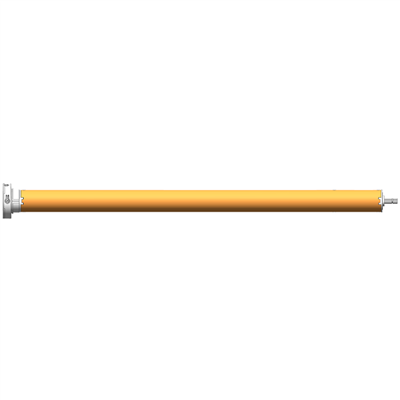
As a key component in modern automation equipment, tubular motors are widely used in electric curtains, sunshade systems, industrial roller blinds and other fields. Its core function is to achieve smooth and low-noise rotation through a precise mechanical structure. Understanding the molding process of tubular motors helps to understand its performance advantages and market competitiveness.
The molding process of tubular motors mainly includes four major links: shell injection molding, shaft core processing, gear set assembly and motor integration. First of all, the shell is usually made of high-strength engineering plastics and manufactured through precision injection molding. This process requires strict control of temperature, pressure and cooling time to ensure the shell size accuracy and surface smoothness, thereby improving the stability and durability of the motor during operation.
The shaft core is the core transmission component of the tubular motor. It is generally made of high-quality steel and processed through processes such as turning, grinding and heat treatment. High-precision shaft core processing can ensure low friction and long life during motor operation, while reducing noise generation. Gear set assembly directly affects the power transmission efficiency of the motor. Precision gear meshing technology is used to ensure smooth power transmission and reduce energy loss.
Motor integration is the last step in tubular motor molding, which includes assembling core components such as motor stators, rotors, and circuit boards into the housing and conducting rigorous testing. This link requires ensuring reliable electrical connections and good heat dissipation performance, and verifying the stability of the motor in long-term operation through aging tests.
With the advancement of intelligent manufacturing technology, the molding process of tubular motors is developing towards high precision and high efficiency. The application of automated injection molding equipment, CNC machining centers, and intelligent detection systems not only improves production efficiency, but also further optimizes product quality. In the future, lightweight, low energy consumption, and intelligence will become important development directions for tubular motor molding processes.
Mastering the molding process of tubular motors will not only help improve product performance, but also enhance market competitiveness. For foreign trade companies, in-depth understanding of the technical details in this field can better meet the needs of international customers and promote business growth.