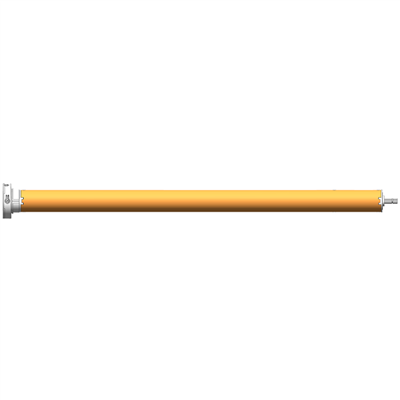
In the field of modern industrial and commercial automation, tubular motors are widely used in rolling shutters, sunshade systems, projection screens and other equipment due to their compact structure and efficient transmission performance. However, long-term operation may cause motor failure, affecting the normal use of the equipment. Mastering the maintenance knowledge of tubular motors is crucial to extending the life of the equipment and reducing maintenance costs.
Common faults and cause analysis
Tubular motor failures are usually manifested as abnormal operation, increased noise or complete failure. Common causes include motor overheating, gear wear, circuit failure or control system failure. Overheating may be caused by long-term overload operation or poor heat dissipation; gear wear is mostly caused by insufficient lubrication or foreign matter entering the transmission system; circuit problems may involve poor power contact or damage to the control board.
Maintenance steps and precautions
Repairing tubular motors requires a systematic process. First, disconnect the power supply to ensure safe operation. Then check the appearance of the motor to confirm whether there is obvious damage or foreign matter blocking it. If the motor cannot start, check whether the power connection and control signal are normal. For the gear transmission part, the gear wear should be disassembled and checked, and the damaged parts should be cleaned or replaced in time. When lubricating, use the specified type of lubricant to avoid excessive or incompatible grease.
Pay special attention to safety protection during maintenance. There may be high-voltage components inside the tubular motor, and non-professional operation may cause electric shock or further damage to the equipment. It is recommended to check the motor operation status regularly, monitor abnormal noise and temperature changes with a stethoscope or infrared thermometer, and detect potential problems in advance.
The importance of preventive maintenance
Regular maintenance can significantly reduce the failure rate of tubular motors. It is recommended to clean the motor surface and heat dissipation holes every six months, check the lubrication of transmission parts, and test the control system response speed. For high-frequency use scenarios, the maintenance cycle can be shortened. In addition, choosing the appropriate motor model and specifications to avoid overload operation can effectively extend the service life of the equipment.
Mastering scientific repair and maintenance methods can not only reduce downtime, but also improve the overall reliability of the automation system. With technological advances, the intelligent monitoring function of tubular motors in the future will further simplify the maintenance process and provide more efficient solutions for various industries.