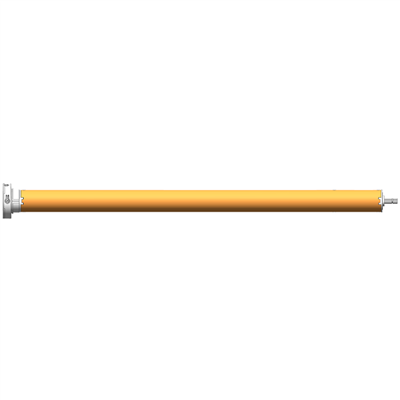
In the field of modern automated doors and windows, sunshade systems and industrial equipment, tubular motors have become key components due to their compact structure and stable performance. However, the requirements for motors in different application scenarios vary significantly, and understanding their core differences can help buyers accurately match their needs.
Drive mode and control accuracy
Tubular motors are mainly divided into two categories: direct current (DC) and alternating current (AC). With electronic speed regulation technology, DC motors can achieve stepless speed change and precise positioning, and are suitable for scenarios that require frequent start and stop or speed adjustment, such as smart curtains or lifting curtains. AC motors rely on mechanical speed change, have a simple structure and low maintenance cost, and are mostly used for industrial rolling shutters that do not require high speed stability. In addition, some high-end DC motors support bus communication protocols, which can realize multi-device linkage control, further improving the level of automation.
Torque and load capacity
The torque output of the motor directly determines its load capacity. Lightweight tubular motors usually have a torque between 1-5Nm, which is suitable for small doors and windows or light curtains; while heavy-duty motors have a torque of more than 10Nm, which can drive heavy industrial roller shutters or fire doors. It should be noted that the torque is proportional to the size of the motor, so performance and size need to be weighed in places where space is limited.
Noise and energy consumption performance
Due to the use of rare earth permanent magnets and electronic commutation technology, the operating noise of DC motors is generally less than 40 decibels, which is suitable for places with high requirements for quietness, such as homes or offices. AC motors are mostly used in outdoor or industrial environments due to their high electromagnetic noise. In terms of energy consumption, the efficiency of DC motors can reach more than 80%, and long-term use can significantly reduce electricity expenses, while the energy efficiency of AC motors is usually less than 70%.
Protection level and application scenarios
According to the IP protection standard, tubular motors can be divided into indoor and outdoor types. The protection level of indoor motors is mostly IP42, which is only drip-proof; outdoor motors must reach IP54 or higher to resist dust and rain erosion. In addition, some motors have built-in overheat protection and overload protection functions, which can adapt to harsh working conditions such as high temperature and high humidity.
When choosing a tubular motor, you need to consider factors such as drive mode, torque requirements, noise restrictions and operating environment. Only by clarifying these differences can you ensure that the equipment is perfectly matched with the actual application and improve the reliability and service life of the system.