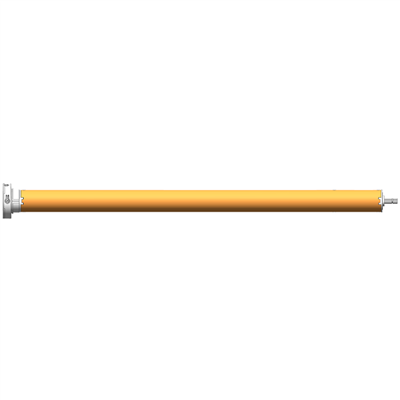
As a key component in modern automation equipment, tubular motors are widely used in electric curtains, sunshade systems, industrial rolling doors and other fields. Its core function is to achieve precise and smooth motion control by driving the tubular structure with a motor. With the increasing demand for intelligence and energy saving, the technical methods of tubular motors are also being optimized.
Core technical methods
The design of tubular motors usually uses DC brushless or AC motors as power sources, combined with a reduction mechanism to achieve low-speed and high-torque output. Among them, brushless motors have become the first choice for high-end applications due to their high efficiency, low noise and long life. In addition, Hall sensors or encoders are integrated inside the motor to monitor position and speed in real time to ensure the accuracy of movement.
In terms of transmission systems, tubular motors generally use planetary gears or worm gear reduction mechanisms to reduce speed and increase torque. This design can not only adapt to heavy load requirements, but also reduce the size of the motor, making it more suitable for scenarios with limited space.
Trends in intelligence and energy saving
In recent years, tubular motors are gradually integrating Internet of Things technology to support remote control and automation scene linkage. For example, through Wi-Fi or Bluetooth modules, users can adjust the opening and closing degree of curtains through mobile phone APP or smart home system. Some high-end products also have light sensing or temperature control functions, which can automatically adjust the operating status according to environmental conditions.
In terms of energy saving, the new generation of tubular motors adopts high-efficiency motor design and intelligent standby mode to significantly reduce standby energy consumption. At the same time, some products support energy recovery technology to convert braking energy into electrical energy storage to further improve energy efficiency.
Application scenario expansion
In addition to traditional electric curtains and shading systems, tubular motors are gradually entering the field of industrial automation. For example, in warehousing and logistics, rolling shutter doors driven by tubular motors can achieve fast opening and closing, improving the efficiency of goods in and out. In addition, medical equipment and laboratory automation equipment have also begun to use tubular motors to meet the needs of high-precision and low-noise operation.
In the future, with the advancement of materials science and control technology, tubular motors will demonstrate their value in a wider range of fields and provide reliable support for the development of automation and intelligence.