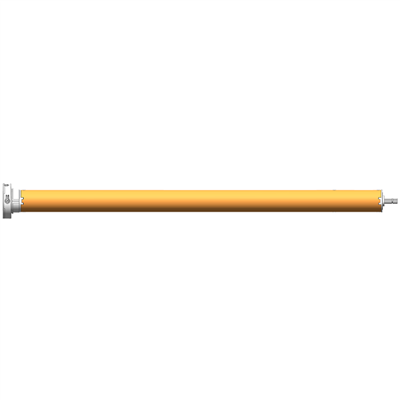
In recent years, tubular motors have been increasingly used in automated doors and windows, shading systems and industrial transmission fields. As precision drive equipment, its performance and reliability directly affect the end-user experience. This article combines industry practice to summarize the key technical points and application experience of tubular motors, providing reference for foreign trade practitioners and end users.
Technology iteration promotes efficiency improvement
Modern tubular motors generally adopt low-noise DC brushless design, and achieve energy consumption reduction of more than 30% by optimizing electromagnetic structure and bearing process. Some high-end products integrate Hall sensors and intelligent control modules, support speed adjustment, resistance rebound and other functions, and adapt to smart home systems. It is worth noting that the matching of motor torque and fuselage length directly affects the service life, and the selection should be accurate according to the weight of the curtain body when purchasing.
Differentiation of application scenarios
In the field of building exterior shading, tubular motors must meet extreme temperature conditions of -30℃ to 70℃, and the housing protection level must reach IP54 or above. The home market pays more attention to silent performance and requires operating noise to be less than 40 decibels. Foreign trade companies need to adjust product parameters according to the climate characteristics of different regions. For example, the Middle East market needs to strengthen heat dissipation design, while the Nordic region needs to strengthen low-temperature start-up tests.
Key details of installation and maintenance
Actual cases show that about 60% of motor failures are caused by improper installation. Correct limiter debugging can avoid mechanical damage caused by excessive winding of the curtain body. It is recommended to reserve 10-15cm travel margin. Regular cleaning of the track and lubrication of the transmission parts can extend the life of the equipment, especially in areas with more sand and dust, the replacement frequency of dustproof seals needs to be increased.
Future trends and supply chain optimization
With the popularization of Internet of Things technology, the annual growth rate of demand for remotely controlled intelligent tubular motors has reached 15%. In terms of supply chain, the use of modular design can reduce after-sales maintenance costs by 30%. It is recommended that foreign trade companies establish a localized warehousing system, focus on reserving CE-certified products for the European market, and give priority to meeting UL standards for the North American market.
Mastering these core experiences will help companies accurately grasp the market opportunities for tubular motors and establish differentiated advantages in fierce international competition.