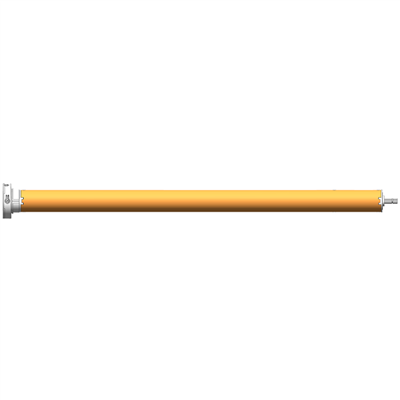
In recent years, with the rapid development of automation and intelligent technology, tubular motors have been increasingly used in the fields of architecture, home and industry. As the core driving component of curtains, awnings and industrial roller shutter systems, the technological iteration of tubular motors is driving the industry towards high efficiency, silence and energy saving. This article will explore the key technological breakthroughs of tubular motors and their market application prospects.
Technology upgrade: silence and energy efficiency become core competitiveness
Traditional tubular motors are often criticized for noise and energy consumption problems, while the new generation of products has significantly reduced operating noise by optimizing electromagnetic design and using high-precision bearings. The noise of some high-end models has been controlled below 35 decibels, close to the level of library environment. In addition, the popularity of brushless DC motors has further improved energy efficiency, and energy consumption is 40%-60% lower than that of traditional AC motors, which is in line with the global trend of energy conservation and emission reduction.
In terms of intelligence, tubular motors with integrated Internet of Things technology support mobile phone APP remote control, automatic light sensing adjustment and scene linkage functions. For example, the system can automatically adjust the opening and closing angle of the curtains according to the intensity of sunlight, or achieve one-button operation through voice assistants. Such functions have become standard in the high-end market.
Diversified application scenarios
The market demand for tubular motors is extending from civil buildings to professional fields such as medical care and education. The demand for low-noise curtain systems in hospital wards has promoted the technical iteration of silent motors; schools and office buildings prefer automation solutions with timer switches and energy management functions. In addition, the demand for high-torque and high-load motors in the industrial rolling door market has increased significantly, and the load-bearing capacity of related products has exceeded 200 kilograms.
It is worth noting that customized services have become a new hot spot in the industry. The differences in requirements for motor size, voltage adaptability and protection level (such as IP44 to IP65) from customers in different regions have prompted suppliers to provide modular designs to meet diverse needs.
In the future, with the advancement of material science and intelligent control technology, tubular motors will continue to make breakthroughs in miniaturization, long life and human-computer interaction experience, injecting new impetus into the global building automation market.