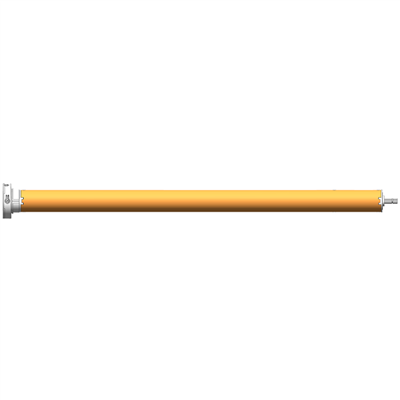
In the context of global trade, tubular motors are key components of automation equipment. The efficiency and safety of their logistics transportation directly affect the delivery cycle of terminal application scenarios. Understanding the logistics characteristics of tubular motors will help optimize supply chain management and reduce transportation risks.
Tubular motors are usually composed of precision mechanical parts and electronic components. They are small in size but complex in structure. Their standard packaging mostly uses anti-static materials to wrap the core components, and is equipped with customized paper boxes or plastic shells to ensure that they are protected from vibration, moisture and static electricity during transportation. Some high-precision models will also have additional anti-vibration foam or airbag cushioning layers to further reduce the impact of bumps on internal components.
From the perspective of logistics attributes, tubular motors belong to the category of "light throw goods". The weight of a single piece is generally between 5 and 15 kilograms, but the volume is relatively fixed. This type of cargo has high requirements for the utilization of transportation space, so it is necessary to pay attention to stacking stability when loading containers or distributing air freight pallets. It is worth noting that if the motor contains permanent magnets, magnetic detection must be reported in advance to avoid affecting air transportation safety due to excessive magnetic field strength.
The choice of transportation mode needs to be balanced between delivery time and cost. Ocean transportation is suitable for large-volume orders, but a transportation cycle of at least 4 weeks must be reserved, and the packaging must meet the IMDG (International Maritime Dangerous Goods Code) standards. Although air transportation can shorten the delivery time to within 72 hours, the freight cost may be 5-8 times that of ocean transportation, which is more suitable for emergency replenishment or high value-added orders. Land transportation is mostly used in regional distribution networks. For example, truck transportation within the EU can provide door-to-door service and reduce transit losses.
In recent years, intelligent logistics technology has been gradually applied to the transportation of tubular motors. Some companies use RFID tags to track the flow of individual products, or embed temperature and humidity sensors in the packaging to monitor transportation environment data in real time. These measures not only improve the transparency of the supply chain, but also provide a reliable basis for after-sales quality traceability.
With the growth of industrial automation demand, the global trade volume of tubular motors continues to rise. Mastering its logistics characteristics and choosing an appropriate transportation solution will become an important part of improving the market competitiveness of enterprises.