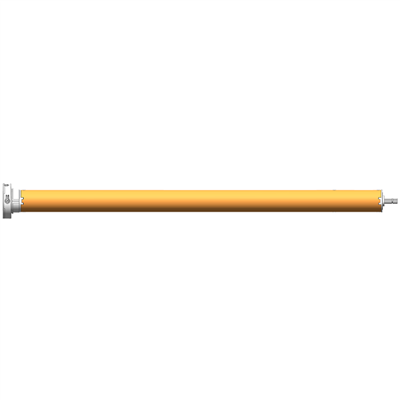
With the continuous improvement of building intelligence and energy-saving and environmental protection needs, tubular motors, as the core driving components of smart shading systems, are ushering in a wider range of application scenarios. From residential curtain automation to skylight control in commercial buildings, tubular motors have become an indispensable technical solution for modern buildings with their compact structure, silent operation and precise positioning.
The core advantage of tubular motors lies in their high degree of integration and adaptability. Compared with traditional motors, tubular motors adopt a hollow shaft design and can be directly embedded in curtain tracks or awning structures, saving installation space while improving overall aesthetics. In addition, its low noise characteristics (usually less than 40 decibels) are particularly suitable for places with high requirements for quiet environments, such as offices, hospitals and high-end residences. By matching with intelligent control systems, users can achieve remote control through mobile phone APP, voice assistants or timing programs to further optimize energy efficiency.
At the technical level, current tubular motor solutions are developing in the direction of high precision and low energy consumption. Some advanced products have integrated Hall sensors and closed-loop control systems, which can provide real-time feedback on operating status and automatically adjust torque to ensure stable performance under load changes. For different application scenarios, tubular motors of various specifications have appeared on the market, covering diverse needs from light curtains to heavy awnings. For example, motors with a power range of 10W to 60W can be adapted to tracks of different sizes, while models with a waterproof rating of IP44 or above can meet outdoor installation requirements.
From the perspective of market trends, the growth in demand for tubular motors is closely related to global building energy-saving policies. The EU "Building Energy Efficiency Directive" and the US "Energy Star" certification both list smart shading systems as recommended technologies, which has promoted the continued increase in the penetration rate of tubular motors in new projects and renovation of old houses. In the future, with the popularization of Internet of Things technology, tubular motors will further integrate sensor data to achieve automatic adjustment based on light intensity, temperature and even user behavior patterns, providing users with a more intelligent experience.
For foreign trade companies, grasping the technical iteration of tubular motors and regional market demand differences will be the key to seizing the international market. By providing customized solutions and localized services, companies can take the lead in the wave of building automation.