

Hey there! As a supplier of low noise tubular motors, I often get asked if these motors are suitable for areas with high electromagnetic interference (EMI). It's a great question, and one that I'm happy to dive into.
First off, let's talk a bit about what low noise tubular motors are. These motors are designed to be quiet, which makes them perfect for applications where noise is a concern, like in residential settings or offices. They're also compact and easy to install, which is a big plus. We offer a range of 45mm tubular motors, including the 45mm Electronic Radio Tubular Motor, the 45mm Manual Radio Tubular Motor, and the 45mm Radio Tubular Motor. These motors are known for their reliability and performance.
Now, let's get to the main question: Are low noise tubular motors suitable for areas with high electromagnetic interference? The short answer is, it depends.
How EMI Affects Motors
Electromagnetic interference is basically unwanted electromagnetic noise that can disrupt the normal operation of electronic devices. Motors, including low noise tubular motors, are electronic devices that can be affected by EMI. When a motor is exposed to high levels of EMI, it can experience a variety of problems.
One of the most common issues is electrical noise in the control signals. Low noise tubular motors often rely on precise control signals to operate smoothly. EMI can introduce noise into these signals, causing the motor to behave erratically. For example, it might start and stop unexpectedly, or it could run at an inconsistent speed.
Another problem is that EMI can damage the electronic components inside the motor. The control circuits, sensors, and other sensitive parts of the motor are vulnerable to the effects of high - energy electromagnetic fields. Over time, this damage can lead to reduced motor performance and eventually, motor failure.
Our Low Noise Tubular Motors' Resistance to EMI
At our company, we've taken steps to make our low noise tubular motors as resistant to EMI as possible. We use high - quality shielding materials in the motor design. These shielding materials act as a barrier, preventing electromagnetic waves from penetrating the motor and interfering with its internal components.
We also incorporate advanced filtering circuits in our motors. These circuits are designed to remove the unwanted electrical noise from the power supply and control signals. By filtering out the EMI, we can ensure that the motor receives clean and stable signals, which helps it operate more reliably.
However, even with these measures, there are limits to how much EMI our motors can handle. In extremely high - EMI environments, such as near large industrial machinery or high - power radio transmitters, the motors may still experience some issues.
Applications in High - EMI Areas
Despite the potential challenges, there are still many applications where our low noise tubular motors can be used in areas with some level of EMI. For example, in some commercial buildings, there may be a certain amount of electromagnetic noise from other electrical systems. But as long as the EMI levels are within the tolerance range of our motors, they can still perform well.

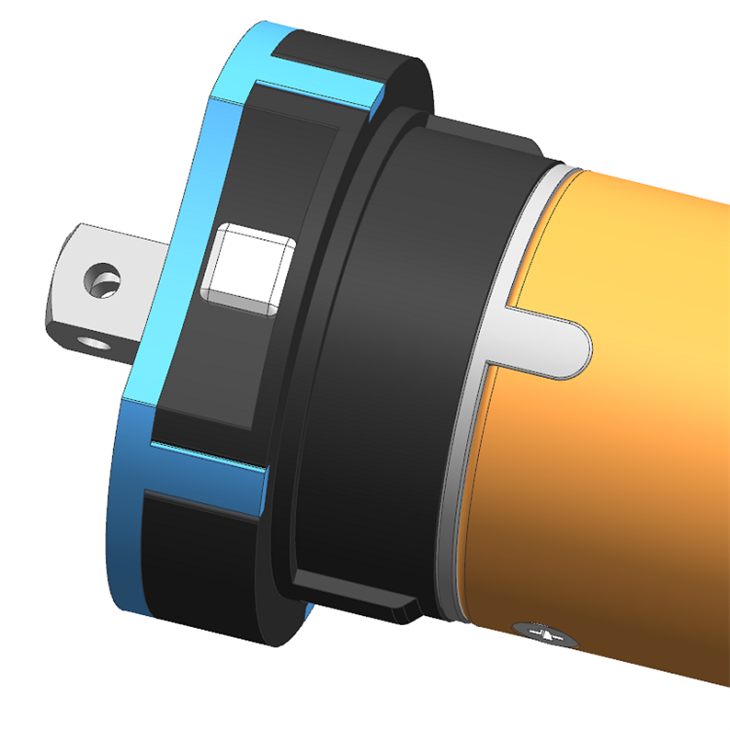
In the home automation field, there are often multiple electronic devices operating in close proximity, which can create a small amount of EMI. Our motors can usually handle this level of interference without significant problems. They can be used for things like window blinds or curtains, providing a quiet and reliable operation.
Tips for Using Motors in High - EMI Areas
If you plan to use our low noise tubular motors in an area with high EMI, here are some tips to help ensure their proper operation:
- Proper Grounding: Make sure the motor is properly grounded. Grounding helps to divert the unwanted electrical currents caused by EMI away from the motor, reducing the risk of interference.
- Distance from EMI Sources: Try to keep the motor as far away as possible from known sources of EMI. For example, if there's a large generator nearby, place the motor at a safe distance.
- Use Shielded Cables: When connecting the motor, use shielded cables. These cables are designed to protect the electrical signals from EMI.
Conclusion
So, to sum it up, our low noise tubular motors have been designed with features to resist electromagnetic interference, but they do have their limits. In areas with moderate levels of EMI, they can work well and provide reliable performance. However, in extremely high - EMI environments, additional precautions may be needed, and there's still a possibility of some interference.
If you're considering using our low noise tubular motors in an area with high EMI, I'd be more than happy to discuss your specific situation with you. We can help you determine if our motors are the right fit for your application and provide you with any additional support you may need.
If you're interested in purchasing our low noise tubular motors or want to have a detailed discussion about your specific requirements, feel free to reach out. We're always here to assist you in finding the best motor solution for your needs.
References
- Grover, F. W. (1946). Inductance Calculations: Working Formulas and Tables. Dover Publications.
- Paul, C. R. (2006). Introduction to Electromagnetic Compatibility. John Wiley & Sons.
- Ott, H. W. (2009). Electromagnetic Compatibility Engineering. John Wiley & Sons.


