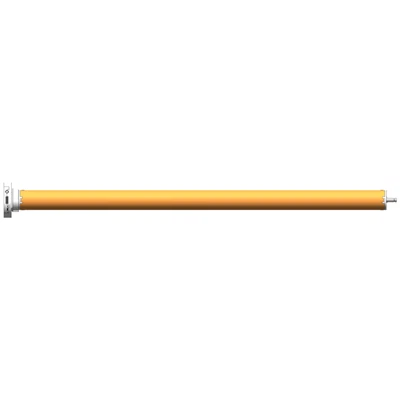
As a supplier of motors for automatic awnings, I often get asked whether these motors can prevent the over - extension of the awning. This is a crucial question, as over - extension can lead to various problems, including damage to the awning fabric, the motor itself, and even pose safety risks. In this blog, I'll delve into this topic, exploring how modern automatic awning motors are designed to prevent over - extension and the features that make this possible.
The Importance of Preventing Over - Extension
Before we discuss how motors prevent over - extension, it's essential to understand why it's so important. An awning that extends beyond its intended limit can cause significant damage. The fabric may tear or stretch beyond its capacity, leading to a shorter lifespan and a less aesthetically pleasing appearance. Moreover, the mechanical components of the awning, such as the arms and tracks, can be put under excessive stress, which may result in bending or breaking.
From a safety perspective, an over - extended awning can become unstable. In windy conditions, it may be more likely to collapse, potentially causing injury to people or damage to property. Therefore, preventing over - extension is not only about protecting the awning but also about ensuring the safety of those around it.
How Automatic Awning Motors Prevent Over - Extension
Limit Switches
One of the most common methods used by automatic awning motors to prevent over - extension is the use of limit switches. These are mechanical or electrical devices that are installed within the motor or the awning's operating mechanism. When the awning reaches its maximum or minimum extension point, the limit switch is triggered.
Mechanically, a limit switch may be a simple lever that is pushed by a part of the awning's moving mechanism. Once the lever is activated, it interrupts the electrical circuit that powers the motor, stopping the awning's movement. Electrically, a limit switch can be a sensor that detects the position of the awning through changes in electrical resistance or other electrical properties.


For example, in our 59mm Standard Tubular Motor, we have precision - engineered limit switches. These switches are calibrated to ensure that the awning stops exactly at the pre - set maximum and minimum extension points. This not only protects the awning but also provides a reliable and consistent operation for the user.
Encoders
Another advanced technology used in modern automatic awning motors is the encoder. An encoder is a device that can measure the position, speed, and direction of the motor's rotation. By continuously monitoring these parameters, the encoder can accurately determine the position of the awning at any given time.
When the awning approaches its maximum extension, the encoder sends a signal to the motor's control unit. The control unit then reduces the power to the motor and eventually stops it before the awning extends too far. Encoders offer a high level of precision, allowing for very accurate control of the awning's movement.
Our 59mm Electronic Radio Tubular Motor is equipped with a state - of - the - art encoder system. This system provides real - time feedback to the motor, ensuring that the awning's extension is precisely controlled. It also allows for easy adjustment of the extension limits, giving the user more flexibility in setting up the awning according to their specific needs.
Programmable Control Systems
Many modern automatic awning motors come with programmable control systems. These systems allow the user to set the maximum and minimum extension limits according to their preferences. Using a remote control or a smartphone app, the user can adjust the limits with a high degree of accuracy.
The programmable control system communicates with the motor and the limit switches or encoders to ensure that the awning stops at the desired positions. This feature is particularly useful for awnings that need to be adjusted for different seasons or specific usage scenarios.
Factors Affecting the Prevention of Over - Extension
While automatic awning motors are designed to prevent over - extension, there are several factors that can affect their effectiveness.
Installation
Proper installation is crucial for the motor to function correctly. If the limit switches are not installed in the right position or if the encoder is not calibrated properly, the motor may not be able to accurately detect the awning's position. It's important to have the awning and the motor installed by a professional who has experience with these systems.
Maintenance
Regular maintenance is also essential. Over time, the mechanical components of the awning and the motor may wear out, which can affect the performance of the limit switches and encoders. Dust, dirt, and moisture can also cause problems, such as corrosion or electrical malfunctions. By performing regular maintenance, including cleaning, lubrication, and inspection, the motor can continue to prevent over - extension effectively.
Environmental Conditions
Extreme environmental conditions can also impact the motor's ability to prevent over - extension. For example, high winds can put additional stress on the awning, causing it to move more than expected. In such cases, the motor may need to be equipped with additional safety features, such as wind sensors, to ensure that the awning is retracted before it becomes over - extended.
Our Product Range and Over - Extension Prevention
At our company, we offer a wide range of motors for automatic awnings, each designed with advanced features to prevent over - extension. Our 59mm Manual Radio Tubular Motor combines the convenience of manual operation with the reliability of radio control. It is equipped with high - quality limit switches that ensure precise control of the awning's extension.
Our 59mm Standard Tubular Motor and 59mm Electronic Radio Tubular Motor, as mentioned earlier, use state - of - the - art technologies such as encoders and programmable control systems. These motors provide not only accurate prevention of over - extension but also a user - friendly experience.
Conclusion
In conclusion, automatic awning motors can effectively prevent over - extension through the use of limit switches, encoders, and programmable control systems. However, proper installation, maintenance, and consideration of environmental conditions are necessary to ensure their optimal performance.
If you are in the market for motors for automatic awnings and are concerned about over - extension, our products offer reliable solutions. We are committed to providing high - quality motors that not only protect your awning but also ensure the safety of your surroundings. If you have any questions or would like to discuss your specific requirements, please feel free to contact us for a purchase negotiation.
References
- "Motorized Awning Systems: Design and Operation" - A technical guide on the design and functionality of automatic awning motors.
- "Safety Standards for Outdoor Awnings" - A publication that outlines the safety requirements for awnings, including the prevention of over - extension.