As a supplier of low noise tubular motors, I often encounter questions from customers regarding the features and safety mechanisms of our products. One of the most frequently asked questions is whether low noise tubular motors have a built - in over - load protection. In this blog, I will delve into this topic, providing in - depth insights and scientific explanations.
Understanding Low Noise Tubular Motors
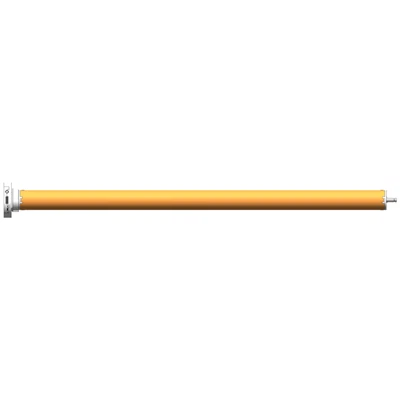
Low noise tubular motors are designed to operate with minimal sound emissions, making them ideal for applications where noise can be a concern, such as residential blinds, curtains, and awnings. These motors are housed within a tubular casing, which not only provides protection but also allows for a compact and efficient design. The quiet operation is achieved through advanced engineering and the use of high - quality materials that reduce vibrations and friction during the motor's operation.
The Importance of Over - load Protection
Over - load protection is a crucial safety feature in any motor. When a motor is overloaded, it means that it is being forced to work beyond its designed capacity. This can occur due to various reasons, such as a mechanical obstruction in the movement of the blind or curtain, incorrect installation, or a sudden increase in the load on the motor. Overloading a motor can lead to several problems, including overheating, damage to the motor windings, and even a fire hazard.
Over - heating is a common consequence of over - loading. When a motor is overloaded, the current flowing through its windings increases significantly. According to Joule's law, the heat generated in a conductor is proportional to the square of the current (H = I²Rt, where H is the heat generated, I is the current, R is the resistance, and t is the time). As the heat builds up, it can cause the insulation on the motor windings to degrade, leading to short - circuits and ultimately motor failure.
Built - in Over - load Protection in Low Noise Tubular Motors
Most modern low noise tubular motors do come with built - in over - load protection mechanisms. These mechanisms are designed to detect when the motor is being overloaded and take appropriate action to prevent damage.
One common type of over - load protection is the thermal protection system. This system uses a thermal sensor, usually a thermostat, which is placed in close proximity to the motor windings. When the temperature of the motor rises above a certain threshold, the thermostat trips, interrupting the electrical circuit and stopping the motor. Once the motor cools down to a safe temperature, the thermostat resets, and the motor can be restarted.


Another type of over - load protection is the current - sensing system. This system monitors the current flowing through the motor. If the current exceeds a pre - set limit, which indicates an over - load condition, the motor controller will cut off the power supply to the motor. Current - sensing systems are often more precise than thermal protection systems as they can detect an over - load condition before the motor starts to overheat.
Our Company's Low Noise Tubular Motors
At our company, we take pride in offering high - quality low noise tubular motors with reliable over - load protection. Our 45mm Radio Tubular Motor is a prime example. It is equipped with both thermal and current - sensing over - load protection systems. This dual - protection approach ensures that the motor is well - protected against various over - load scenarios.
The 45mm Manual Radio Tubular Motor also features advanced over - load protection. In addition to the standard protection mechanisms, it has a manual override option, which allows for manual control in case of an emergency or a malfunction in the automatic protection system.
Our 45mm Standard Tubular Motor is designed with durability and safety in mind. The over - load protection system in this motor is carefully calibrated to ensure that it can handle normal operating conditions while providing reliable protection against over - loads.
Scientific Testing and Validation
To ensure the effectiveness of the over - load protection in our low noise tubular motors, we conduct rigorous scientific testing. We simulate various over - load scenarios in our testing facilities, including mechanical blockages and sudden increases in load. During these tests, we monitor the motor's performance, including temperature, current, and speed.
We also use advanced diagnostic equipment to analyze the operation of the over - load protection systems. For example, we use thermal imaging cameras to monitor the temperature distribution in the motor during over - load conditions. This allows us to identify any potential hot spots and make adjustments to the thermal protection system if necessary.
Benefits of Over - load Protection for Customers
For customers, the built - in over - load protection in our low noise tubular motors offers several benefits. Firstly, it provides peace of mind. Knowing that the motor is protected against over - loads means that customers do not have to worry about potential damage to the motor or the associated safety risks.
Secondly, it reduces maintenance costs. Over - load protection helps to extend the lifespan of the motor by preventing damage caused by over - loading. This means that customers will not have to replace the motor as frequently, saving them money in the long run.
Finally, it ensures reliable operation. With over - load protection, the motor is less likely to experience unexpected failures, which can disrupt the normal use of the blinds or curtains. This is especially important in commercial and public buildings, where the smooth operation of window coverings is essential.
Conclusion
In conclusion, most low noise tubular motors, including the ones we supply, do have built - in over - load protection. This protection is essential for the safety and reliability of the motor. Our company's low noise tubular motors, such as the 45mm Radio Tubular Motor, 45mm Manual Radio Tubular Motor, and 45mm Standard Tubular Motor, are equipped with advanced over - load protection systems that have been scientifically tested and validated.
If you are in the market for high - quality low noise tubular motors with reliable over - load protection, we invite you to contact us for more information and to discuss your specific requirements. Our team of experts is ready to assist you in choosing the right motor for your application and to provide you with the best possible service.
References
- Electrical Engineering Handbook, edited by Richard C. Dorf
- Motor and Drive Systems: Design, Analysis, and Application, by Paul C. Krause, Oleg Wasynczuk, and Scott D. Sudhoff