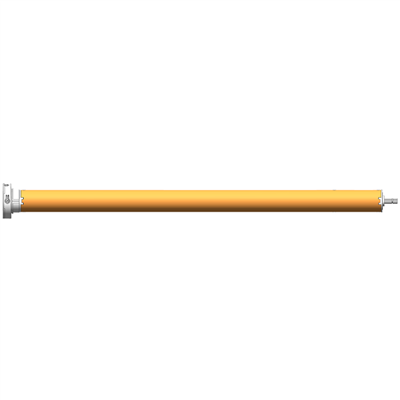
When it comes to automatic awnings, the motor is the heart of the system. It powers the movement, ensuring smooth operation and long - term reliability. One crucial aspect to consider when selecting a motor for an automatic awning is its Ingress Protection (IP) rating. As a supplier of motors for automatic awnings, I understand the importance of this rating and how to check it. In this blog post, I'll share with you the ins and outs of IP ratings for awning motors.
What is an IP Rating?
The IP rating, or Ingress Protection rating, is an international standard (IEC 60529) that classifies the degree of protection provided by an enclosure of an electrical device against the intrusion of solid objects (such as dust) and liquids (such as water). The rating consists of two digits. The first digit indicates the protection level against solids, and the second digit indicates the protection level against liquids.
First Digit: Protection Against Solids
- 0: No protection against solid objects.
- 1: Protection against solid objects larger than 50mm (e.g., a hand).
- 2: Protection against solid objects larger than 12.5mm (e.g., a finger).
- 3: Protection against solid objects larger than 2.5mm (e.g., tools or wires).
- 4: Protection against solid objects larger than 1mm (e.g., small insects).
- 5: Dust - protected. Limited ingress of dust is permitted, but it should not enter in sufficient quantity to interfere with the satisfactory operation of the equipment.
- 6: Dust - tight. No dust can enter the enclosure.
Second Digit: Protection Against Liquids
- 0: No protection against liquids.
- 1: Protection against vertically falling drops of water (e.g., condensation).
- 2: Protection against vertically falling drops of water when the enclosure is tilted up to 15 degrees from the vertical.
- 3: Protection against spraying water at an angle up to 60 degrees from the vertical.
- 4: Protection against splashing water from any direction.
- 5: Protection against water jets from any direction.
- 6: Protection against powerful water jets or heavy seas.
- 7: Protection against the effects of temporary immersion in water under defined conditions.
- 8: Protection against continuous immersion in water under defined conditions.
Why is IP Rating Important for Automatic Awning Motors?
Automatic awnings are often installed outdoors, which means they are exposed to various environmental conditions. Dust, dirt, rain, and even accidental splashes can pose a threat to the motor's performance and lifespan. A motor with a proper IP rating can withstand these elements, reducing the risk of damage and ensuring reliable operation.
For example, in a coastal area where the awning may be exposed to saltwater spray and heavy rain, a motor with a high IP rating (such as IP65 or higher) is essential. On the other hand, in a protected patio area where the awning is only likely to encounter light dust and occasional splashes, a motor with a lower IP rating (such as IP44) may be sufficient.
How to Check the IP Rating of a Motor for an Automatic Awning
1. Check the Product Documentation
The first and most straightforward way to check the IP rating of a motor is to refer to the product documentation. This includes the user manual, technical specifications sheet, or the label on the motor itself. As a supplier, we always provide detailed information about the IP rating of our motors, such as our 59mm Radio Tubular Motor, 59mm Electronic Radio Tubular Motor, and 59mm Standard Tubular Motor. The documentation will clearly state the IP rating, along with other important technical details.
2. Contact the Manufacturer or Supplier
If you can't find the IP rating in the product documentation, or if you have any doubts about the information, you can contact the manufacturer or supplier directly. As a supplier, we have a team of experts who can provide you with accurate and detailed information about the IP rating of our motors. We can also offer advice on which motor is most suitable for your specific application based on the environmental conditions.
3. Look for Certification
Some motors may have certification marks that indicate compliance with relevant standards. For example, a motor with an IP rating should comply with the IEC 60529 standard. Look for marks such as "CE" (Conformité Européene), which indicates that the product meets the essential health and safety requirements of the European Union, or other international certification marks. These marks can give you additional confidence in the accuracy of the IP rating.
4. Visual Inspection
In some cases, you can also perform a visual inspection of the motor to get an idea of its potential IP rating. Look for features such as gaskets, seals, and enclosures. A motor with well - designed gaskets and seals is more likely to have a higher IP rating. For example, a motor with a rubber gasket around the enclosure can provide better protection against dust and water ingress. However, visual inspection alone is not sufficient to determine the exact IP rating, and it should be used in conjunction with other methods.
Factors to Consider When Choosing a Motor Based on IP Rating
1. Environmental Conditions
As mentioned earlier, the environmental conditions where the automatic awning will be installed are a crucial factor in determining the appropriate IP rating. Consider factors such as the amount of dust, the frequency of rainfall, and the presence of saltwater or other corrosive substances. For example, if the awning is installed in a desert area with high levels of dust, a motor with a high dust - protection rating (e.g., IP5X or IP6X) is recommended.
2. Installation Location
The installation location of the awning can also affect the required IP rating. If the awning is installed in a fully protected area, such as under a covered patio, a lower IP rating may be sufficient. However, if the awning is exposed to the elements, such as on a rooftop or a beachfront, a higher IP rating is necessary.


3. Cost
Motors with higher IP ratings generally cost more than those with lower ratings. This is because they require more advanced design and manufacturing techniques to achieve the higher level of protection. When choosing a motor, you need to balance the cost with the level of protection required. In some cases, it may be possible to find a motor with a slightly lower IP rating that still meets your needs at a lower cost.
Conclusion
Checking the IP rating of a motor for an automatic awning is an important step in ensuring the long - term performance and reliability of the awning system. By understanding what the IP rating means, how to check it, and the factors to consider when choosing a motor based on the IP rating, you can make an informed decision.
As a supplier of motors for automatic awnings, we offer a wide range of motors with different IP ratings to meet the diverse needs of our customers. Whether you need a motor for a protected patio or a harsh outdoor environment, we can provide you with the right solution. If you have any questions or need assistance in choosing the right motor for your automatic awning, please feel free to contact us. We are here to help you make the best choice for your project.
References
- IEC 60529: Degrees of protection provided by enclosures (IP Code). International Electrotechnical Commission.
- Product documentation of motors for automatic awnings.