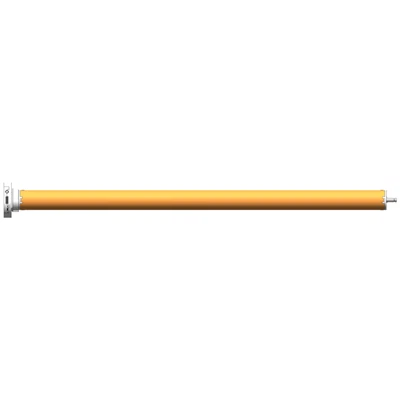
Hey there! As a supplier of AC Tubular Motors, I often get asked about how to install a position sensor on an AC tubular motor. It's a pretty common question, and I'm here to break it down for you in a simple and easy - to - follow way.
First off, let's talk a bit about what a position sensor does. A position sensor on an AC tubular motor helps you accurately control the position of the motor. Whether you're using the motor for blinds, shutters, or other applications, the position sensor allows you to set specific stop and start points. This means you can open your blinds to just the right height or close your shutters completely with precision.
Tools You'll Need
Before you start the installation process, you'll need to gather a few tools. You'll need a screwdriver (both flat - head and Phillips - head usually come in handy), wire cutters, wire strippers, and electrical tape. It's also a good idea to have a multimeter on hand to test the electrical connections. Safety first, so don't forget to wear some safety glasses and gloves.
Step 1: Safety First
The very first thing you need to do is turn off the power supply to the AC tubular motor. This is crucial to avoid any electrical shocks. You can usually find the circuit breaker for the motor in your electrical panel. Flip the switch to the "off" position and double - check that the power is indeed off by trying to operate the motor.
Step 2: Identify the Motor
There are different types of AC tubular motors, like the 45mm Radio Tubular Motor, 45mm Standard Tubular Motor, and 45mm Electronic Radio Tubular Motor. Make sure you know which type of motor you have, as the installation process might vary slightly depending on the model.
Step 3: Locate the Installation Point
Most AC tubular motors have a specific area where the position sensor can be installed. This is usually near the control board of the motor. You might need to remove a small cover or panel to access the installation area. Use your screwdriver to carefully remove any screws holding the cover in place.
Step 4: Prepare the Sensor
Take your position sensor out of the packaging. Check to make sure all the components are there and in good condition. You'll notice that the sensor has some wires attached to it. Use your wire strippers to remove about half an inch of insulation from the ends of these wires.
Step 5: Connect the Wires
Now comes the electrical part. You'll need to connect the wires from the position sensor to the appropriate terminals on the motor's control board. Refer to the wiring diagram that came with your position sensor. Usually, there are color - coded wires that match up with the terminals on the control board. For example, a red wire might connect to a positive terminal, and a black wire to a negative terminal. Use your wire cutters to trim the wires to the right length if needed, and then twist the exposed wire ends together. Once they're twisted, use electrical tape to secure the connection and prevent any short - circuits.
Step 6: Mount the Sensor
After the wires are connected, it's time to mount the position sensor in place. Most sensors come with mounting holes or brackets. Align the sensor with the installation point on the motor and use your screwdriver to attach it. Make sure it's firmly in place so that it won't move during the motor's operation.
Step 7: Test the Connection
Before you put the cover back on and turn the power back on, it's important to test the connection. Use your multimeter to check the electrical continuity of the wires. Set the multimeter to the appropriate setting (usually the resistance or continuity setting) and touch the probes to the wire connections. If the multimeter shows a proper reading, it means the connection is good.
Step 8: Power On and Calibrate
Once you're satisfied with the connection, put the cover back on the motor using the screws you removed earlier. Then, turn the power back on at the circuit breaker. Now, you'll need to calibrate the position sensor. This usually involves running the motor through a full cycle (opening and closing) and setting the desired stop and start points using the control system. The exact calibration process might vary depending on the type of motor and sensor you have, so refer to the user manual for detailed instructions.
Troubleshooting
If you run into any issues during the installation or calibration process, don't panic. Here are some common problems and solutions:
- No power to the sensor: Check the electrical connections again. Make sure the wires are properly connected and there are no loose ends. Also, check the power supply to the motor.
- Inaccurate position readings: This could be due to improper calibration. Try recalibrating the sensor following the instructions in the manual. It could also be a problem with the sensor itself. Check if it's damaged or if there are any loose parts.
Why Choose Our AC Tubular Motors
As a supplier, we offer high - quality AC tubular motors that are designed to work seamlessly with position sensors. Our motors are built with durability and performance in mind. They're energy - efficient, which means you'll save on your electricity bills in the long run. And with a wide range of models like the 45mm Radio Tubular Motor, 45mm Standard Tubular Motor, and 45mm Electronic Radio Tubular Motor, you're sure to find the perfect motor for your needs.
Contact Us for Purchasing
If you're interested in purchasing our AC tubular motors or have any questions about the installation process, feel free to reach out to us. We're here to help you every step of the way, from choosing the right motor to getting it up and running. Whether you're a DIY enthusiast or a professional installer, we've got the products and support you need.


References
- General knowledge about AC tubular motor installation from industry experience.
- Manufacturer's manuals for AC tubular motors and position sensors.