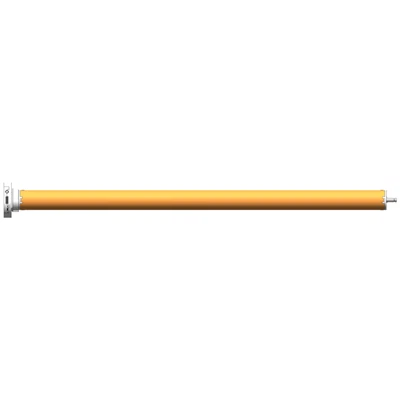
As a supplier of low noise tubular motors, I often encounter inquiries from customers about various technical aspects of our products. One question that comes up frequently is, "What is the thermal resistance of a low noise tubular motor?" In this blog post, I'll delve into this topic to provide a comprehensive understanding of thermal resistance in the context of low noise tubular motors.
Understanding Thermal Resistance
Thermal resistance is a crucial parameter in the design and operation of any electrical motor, including low noise tubular motors. It is a measure of how a material or a component resists the flow of heat. In simpler terms, it indicates how difficult it is for heat to transfer through an object. The unit of thermal resistance is Kelvin per watt (K/W).
For a low noise tubular motor, thermal resistance plays a vital role in determining its performance and reliability. Motors generate heat during operation due to the electrical losses in the windings and the mechanical losses in the bearings and other moving parts. If this heat is not dissipated effectively, it can lead to a rise in the motor's temperature, which can have several negative consequences.
Why Thermal Resistance Matters in Low Noise Tubular Motors
1. Performance Degradation
High temperatures can cause the insulation materials in the motor windings to degrade over time. This can lead to a decrease in the motor's efficiency and power output. As the temperature rises, the resistance of the windings also increases, which further contributes to power losses and reduced performance.
2. Reduced Lifespan
Excessive heat can significantly shorten the lifespan of a low noise tubular motor. The insulation materials can become brittle and crack, leading to electrical shorts and motor failure. Additionally, high temperatures can accelerate the wear and tear of the bearings and other mechanical components, reducing their reliability and increasing the likelihood of premature failure.
3. Safety Concerns
Overheating can pose a safety hazard, especially in applications where the motor is used in close proximity to flammable materials or in environments with strict temperature limits. A motor that runs too hot can increase the risk of fire or other safety incidents.
Factors Affecting the Thermal Resistance of Low Noise Tubular Motors
1. Motor Design
The design of the motor, including the size and shape of the housing, the arrangement of the windings, and the presence of cooling fins or other heat dissipation features, can have a significant impact on its thermal resistance. A well-designed motor will have a lower thermal resistance, allowing heat to be dissipated more effectively.
2. Material Selection
The materials used in the construction of the motor, such as the insulation materials, the stator and rotor laminations, and the housing, can also affect its thermal resistance. Materials with high thermal conductivity, such as copper and aluminum, are commonly used in motor windings and housings to facilitate heat transfer.
3. Operating Conditions
The operating conditions of the motor, including the load, the speed, and the ambient temperature, can also influence its thermal resistance. A motor that is operated at a high load or speed will generate more heat than one that is operated at a lower load or speed. Similarly, a motor that is used in a hot environment will have a higher temperature rise than one that is used in a cooler environment.
Measuring and Managing Thermal Resistance in Low Noise Tubular Motors
1. Thermal Modeling
Thermal modeling is a powerful tool that can be used to predict the temperature distribution and thermal resistance of a low noise tubular motor. By using computer simulations, engineers can analyze the heat transfer mechanisms within the motor and optimize its design to minimize thermal resistance.
2. Temperature Sensors
Temperature sensors can be installed in the motor to monitor its temperature during operation. These sensors can provide real-time data on the motor's temperature, allowing for early detection of overheating and the implementation of appropriate measures to prevent damage.
3. Cooling Systems
Cooling systems, such as fans or liquid cooling, can be used to enhance the heat dissipation of a low noise tubular motor. These systems can help to reduce the motor's temperature and improve its performance and reliability.
Our Low Noise Tubular Motor Products and Thermal Resistance
At our company, we take thermal resistance very seriously in the design and manufacture of our low noise tubular motors. We use advanced thermal modeling techniques to optimize the motor's design and ensure that it has a low thermal resistance. Our motors are also equipped with high-quality insulation materials and cooling features to enhance heat dissipation.
We offer a wide range of low noise tubular motors, including the 45mm Electronic Radio Tubular Motor, the 45mm Radio Tubular Motor, and the 45mm Manual Tubular Motor. These motors are designed to provide reliable and efficient operation in a variety of applications, while maintaining a low noise level and excellent thermal performance.
Conclusion
In conclusion, thermal resistance is a critical factor in the performance, reliability, and safety of low noise tubular motors. By understanding the factors that affect thermal resistance and implementing appropriate measures to manage it, we can ensure that our motors operate at optimal temperatures and provide long-lasting performance.
If you are interested in learning more about our low noise tubular motors or have any questions about thermal resistance or other technical aspects of our products, please feel free to contact us. We are always happy to assist you with your motor selection and provide you with the information you need to make an informed decision.


References
- Chapman, S. J. (2012). Electric Machinery Fundamentals. McGraw-Hill Education.
- Fitzgerald, A. E., Kingsley, C., & Umans, S. D. (2003). Electric Machinery. McGraw-Hill Education.
- Krause, P. C., Wasynczuk, O., & Sudhoff, S. D. (2013). Analysis of Electric Machinery and Drive Systems. Wiley.