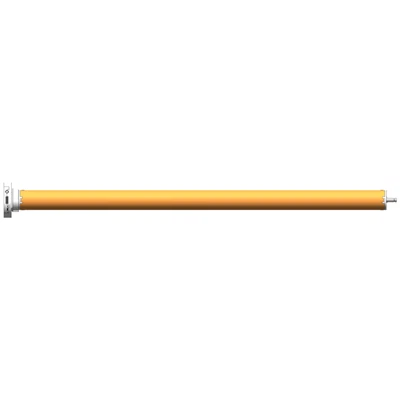
In the realm of modern construction and home improvement, shutter doors play a crucial role in providing security, insulation, and aesthetic appeal. At the heart of these shutter doors lies the tubular motor, a compact yet powerful device that enables smooth and efficient operation. As a leading supplier of shutter doors tubular motors, I am often asked about the materials used in their construction. In this blog post, I will delve into the various materials that go into making these motors, highlighting their properties and the reasons behind their selection.
The Housing: Durable Protection for Internal Components
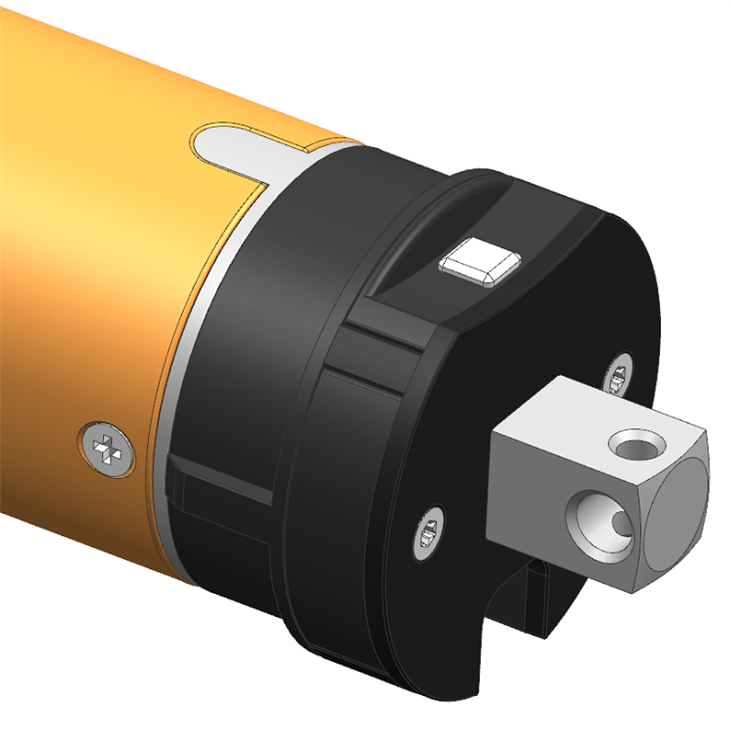
The housing of a shutter doors tubular motor serves as a protective shell for its internal components, shielding them from dust, moisture, and mechanical damage. Typically made from high-quality aluminum alloy, the housing offers several advantages. Firstly, aluminum is lightweight yet strong, making it easy to install and handle while providing sufficient structural integrity. Secondly, it is highly resistant to corrosion, ensuring a long service life even in harsh environmental conditions. Additionally, aluminum has excellent heat dissipation properties, which helps to prevent the motor from overheating during operation.
Some manufacturers may also use steel for the housing, especially in applications where high strength and durability are required. Steel housings are more robust and can withstand heavier loads and impact, making them suitable for commercial and industrial settings. However, steel is more prone to rusting, so it needs to be properly coated or finished to protect against corrosion.

The Stator and Rotor: Core Components for Motor Function
The stator and rotor are the core components of an electric motor, working together to convert electrical energy into mechanical energy. The stator is the stationary part of the motor, consisting of a series of coils wound around a core. The rotor, on the other hand, is the rotating part, typically made of a ferromagnetic material such as iron or steel.
The coils in the stator are usually made of copper wire, which has excellent electrical conductivity and low resistance. Copper is also highly ductile, allowing it to be easily wound into the required shape. The use of copper wire ensures efficient energy transfer and reduces power losses, resulting in a more energy-efficient motor.
The core of the stator and rotor is often made of laminated steel sheets. These sheets are stacked together to form a core, with each sheet insulated from the others. This design helps to reduce eddy currents, which are circulating currents induced in the core by the changing magnetic field. By minimizing eddy currents, the motor's efficiency is improved, and heat generation is reduced.
The Gearbox: Transmitting Power and Torque
The gearbox is an essential part of a shutter doors tubular motor, responsible for transmitting power and torque from the motor to the shutter door. It allows the motor to operate at a higher speed while reducing the output speed and increasing the torque, enabling the door to be opened and closed smoothly.
The gears in the gearbox are typically made of high-strength steel or alloy materials. Steel gears offer excellent wear resistance and can withstand high loads and stresses, ensuring reliable operation over a long period. Alloy materials, such as bronze or brass, may also be used in some applications, especially where noise reduction or corrosion resistance is required.
In addition to the gears, the gearbox also contains bearings, which support the rotating shafts and reduce friction. Bearings are usually made of steel or ceramic materials, depending on the specific requirements of the motor. Steel bearings are commonly used due to their high strength and durability, while ceramic bearings offer lower friction and better heat resistance, resulting in improved efficiency and longer service life.
The Control System: Precision and Flexibility
The control system of a shutter doors tubular motor is responsible for regulating the motor's operation, allowing the user to control the opening and closing of the door. It typically consists of a control board, sensors, and a remote control or switch.
The control board is the brain of the control system, containing electronic components such as microcontrollers, relays, and capacitors. These components work together to process the signals from the sensors and the remote control, and to control the motor's speed, direction, and position. The control board is usually made of printed circuit boards (PCBs), which are made of a non-conductive material such as fiberglass or epoxy resin, with copper traces printed on the surface to connect the electronic components.
The sensors used in the control system can include limit switches, which detect the position of the door and stop the motor when the door reaches its fully open or closed position, and safety sensors, which detect obstacles in the path of the door and reverse the motor's direction to prevent damage. These sensors are typically made of electronic components such as photoelectric sensors, magnetic sensors, or mechanical switches.
The remote control or switch allows the user to operate the motor from a distance or manually. It can be a simple handheld device or a wall-mounted switch, depending on the user's preference. The remote control or switch is usually made of plastic or metal materials, with buttons or switches for controlling the motor's operation.
Conclusion: Quality Materials for Reliable Performance
In conclusion, the construction of a shutter doors tubular motor involves the use of a variety of materials, each selected for its specific properties and functions. The housing provides durable protection for the internal components, the stator and rotor convert electrical energy into mechanical energy, the gearbox transmits power and torque, and the control system regulates the motor's operation. By using high-quality materials and advanced manufacturing techniques, we can ensure that our shutter doors tubular motors offer reliable performance, long service life, and energy efficiency.
If you are in the market for a shutter doors tubular motor, we invite you to explore our range of products, including the 59mm Manual Tubular Motor, the 59mm Electronic Radio Tubular Motor, and the 59mm Manual Radio Tubular Motor. Our motors are designed to meet the highest standards of quality and performance, and we are committed to providing our customers with the best possible service and support. Contact us today to discuss your specific requirements and to learn more about how our products can meet your needs.
References
- "Electric Motors and Drives: Fundamentals, Types, and Applications" by Austin Hughes and Bill Drury
- "Mechanical Design Handbook: Measurement, Analysis, and Control of Engineering Systems" by Myer Kutz
- "Electrical Engineering Handbook" by Richard C. Dorf