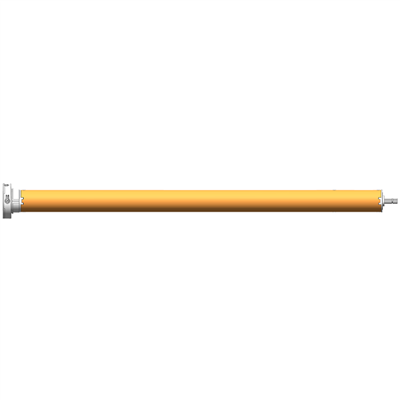
In today's era of rapid development of intelligence and automation, tubular motors, as representatives of precision drive technology, are widely used in electric curtains, sunshade systems, projection screens and industrial automation equipment. Its compact structure, efficient performance and silent design make it an indispensable part of the building and home fields.
The core advantage of tubular motors lies in their highly integrated design. Compared with traditional motors, it integrates the drive device, reduction mechanism and control circuit in a slender metal tube, which greatly saves installation space. This design is particularly suitable for scenes with strict space requirements, such as curtain tracks, skylight awnings, etc. At the same time, the operating noise of tubular motors is extremely low, usually less than 40 decibels, providing users with a quiet and comfortable experience.
On the technical level, modern tubular motors generally use DC brushless or AC variable frequency drive technology, with precise speed control and overload protection functions. Some high-end products also support smart interconnection, which can be remotely controlled through Wi-Fi, Bluetooth or smart home systems to meet users' needs for convenience and energy saving. For example, users can preset the opening and closing time of curtains through mobile phone APP, or automatically adjust the shading angle according to the light intensity.
From the perspective of application scenarios, the market demand for tubular motors continues to grow. In the field of construction, the electric shading systems of commercial complexes and high-end residences rely on their stable performance; in the home market, the popularity of smart curtains and projection screens has further promoted their popularity. In addition, industrial fields such as stage equipment and laboratory partitions have also put forward higher requirements for tubular motors, prompting them to develop towards higher loads and longer life.
In the future, with the maturity of the Internet of Things and artificial intelligence technologies, tubular motors will evolve in a more intelligent and modular direction. By integrating sensors and AI algorithms, motors can sense environmental changes in real time and automatically optimize operating parameters, thereby improving energy efficiency and user experience. For foreign trade companies, grasping this technological trend will help them gain an advantage in the global market.