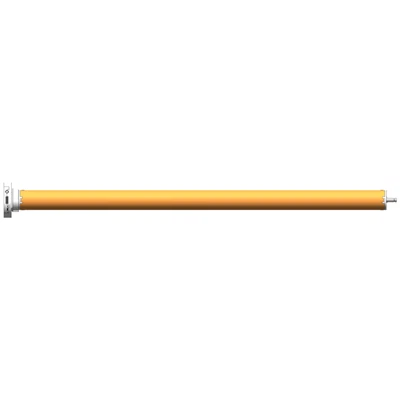
As a supplier of low noise tubular motors, I often get asked about the cooling methods of these motors. In this blog post, I'll delve into the various cooling techniques employed in low noise tubular motors, explaining how they work and why they are crucial for the motor's performance and longevity.


The Importance of Cooling in Tubular Motors
Before we explore the cooling methods, it's essential to understand why cooling is so important for tubular motors. Tubular motors, like all electric motors, generate heat during operation. This heat is a by - product of the electrical resistance in the motor's windings and the mechanical friction within the motor. If this heat is not dissipated effectively, it can lead to several problems.
Excessive heat can cause the motor's insulation to degrade over time, reducing its electrical resistance and potentially leading to short circuits. It can also cause the lubricants in the motor to break down, increasing friction and wear on the moving parts. Moreover, high temperatures can reduce the motor's efficiency, as more energy is wasted as heat instead of being converted into mechanical work. Therefore, proper cooling is vital to maintain the motor's performance, reliability, and lifespan.
Natural Convection Cooling
One of the most basic and commonly used cooling methods for low noise tubular motors is natural convection cooling. This method relies on the natural movement of air around the motor to carry away the heat.
In a tubular motor, the outer casing of the motor is designed to dissipate heat. The casing is usually made of a material with good thermal conductivity, such as aluminum. As the motor heats up during operation, the heat is transferred from the internal components to the outer casing. The air in contact with the hot casing heats up, becomes less dense, and rises. Cooler air then moves in to replace the rising warm air, creating a natural convection current.
The advantage of natural convection cooling is its simplicity and reliability. It has no moving parts, so there is no additional noise or maintenance required. However, its cooling capacity is limited. It is most effective for small - to medium - sized tubular motors with relatively low power ratings. For larger motors or motors that operate under heavy loads for extended periods, natural convection cooling alone may not be sufficient.
Forced Air Cooling
When natural convection cooling is not enough, forced air cooling can be employed. This method involves using a fan to blow air over the motor, increasing the rate of heat transfer.
In a low noise tubular motor with forced air cooling, a small fan is typically installed inside the motor housing. The fan can be either an axial fan or a centrifugal fan, depending on the design of the motor. The fan draws in cool air from the surroundings and blows it over the motor's heat - generating components, such as the windings and the stator. The heated air is then expelled from the motor housing.
Forced air cooling significantly increases the cooling efficiency compared to natural convection cooling. It can handle higher power motors and more demanding operating conditions. However, the addition of a fan also has some drawbacks. The fan itself generates noise, which can be a problem for applications where low noise is a priority. To mitigate this issue, manufacturers often use specially designed low - noise fans and incorporate noise - reducing features, such as acoustic insulation in the motor housing.
Liquid Cooling
In some high - performance low noise tubular motors, liquid cooling is used. This method offers the highest level of cooling efficiency but is also more complex and expensive.
Liquid cooling systems typically use a coolant, such as water or a water - glycol mixture, to absorb the heat from the motor. The coolant is circulated through a series of channels or tubes inside the motor housing. As the coolant passes by the heat - generating components, it absorbs the heat and carries it away. The heated coolant is then pumped to a heat exchanger, where it releases the heat to the surrounding air or to another cooling medium.
Liquid cooling is particularly suitable for tubular motors that operate at very high power levels or in harsh environments where the ambient temperature is high. It can maintain a more stable temperature within the motor, which is beneficial for the motor's performance and reliability. However, liquid cooling systems require additional components, such as pumps, hoses, and heat exchangers, which increase the cost and complexity of the motor. They also require regular maintenance to ensure the proper functioning of the cooling system.
Cooling Considerations for Different Types of Tubular Motors
When it comes to different types of tubular motors, the cooling requirements can vary. For example, let's take a look at some of our popular products:
- 45mm Manual Tubular Motor: This type of motor is often used in applications where manual operation is preferred. Due to its relatively small size and lower power consumption, natural convection cooling is usually sufficient to keep the motor at a safe operating temperature.
- 45mm Standard Tubular Motor: The standard tubular motor is designed for a wide range of applications and may operate under various load conditions. Depending on the specific requirements, it may use either natural convection cooling or forced air cooling. For applications with higher loads or longer operating times, forced air cooling can provide better performance.
- 45mm Manual Radio Tubular Motor: This motor combines manual operation with radio - controlled functionality. Similar to the standard tubular motor, the cooling method depends on the power rating and operating conditions. The design also needs to consider the low - noise requirement, especially when using forced air cooling.
Conclusion
In conclusion, the cooling method of a low noise tubular motor is a critical factor that affects its performance, reliability, and lifespan. Natural convection cooling is simple and reliable but has limited cooling capacity. Forced air cooling offers higher efficiency but may introduce noise. Liquid cooling provides the highest level of cooling but is more complex and expensive.
As a supplier of low noise tubular motors, we carefully select the appropriate cooling method for each motor based on its power rating, operating conditions, and application requirements. We also continuously strive to improve our cooling technologies to provide our customers with motors that offer optimal performance and reliability.
If you are in the market for low noise tubular motors and want to learn more about our products and the cooling methods used, or if you have specific requirements for your application, please feel free to contact us for a detailed discussion. We are always ready to assist you in finding the best motor solution for your needs.
References
- Chapman, S. J. (2012). Electric Machinery Fundamentals. McGraw - Hill Education.
- Fitzgerald, A. E., Kingsley, C., & Umans, S. D. (2003). Electric Machinery. McGraw - Hill Education.