

Hey there! As a supplier of External Venetian Blinds Tubular Motors, I often get asked about how these motors keep themselves cool. You know, heat dissipation is a big deal for these motors. If they overheat, it can lead to all sorts of problems, like reduced performance and even premature failure. So, in this blog post, I'm gonna break down the heat dissipation methods of an external Venetian blinds tubular motor.
Why Heat Dissipation Matters
First off, let's talk about why heat dissipation is so important. When a tubular motor runs, it consumes electrical energy to generate mechanical power. During this process, not all the energy is converted into useful work. Some of it is lost as heat due to electrical resistance in the windings and friction in the moving parts. If this heat isn't dissipated properly, the temperature of the motor will keep rising.
High temperatures can have a negative impact on the motor's performance. It can cause the insulation of the windings to degrade, which increases the risk of short - circuits. It can also reduce the efficiency of the motor, making it consume more power to achieve the same level of performance. In extreme cases, overheating can even damage the motor beyond repair.
Natural Convection
One of the most basic heat dissipation methods for external Venetian blinds tubular motors is natural convection. This is a passive process that relies on the natural movement of air. The motor has a metal housing, which is a good conductor of heat. As the motor generates heat, it transfers this heat to the housing.
The air around the motor gets heated up by the housing. Hot air is less dense than cold air, so it rises. As the hot air rises, it is replaced by cooler air from the surroundings. This continuous movement of air creates a natural convection current that helps carry the heat away from the motor.
However, natural convection has its limitations. It is relatively slow and may not be sufficient to dissipate the heat effectively, especially when the motor is running at high loads or for long periods. That's why many motors also use other heat dissipation methods in addition to natural convection.
Forced Air Cooling
To enhance the heat dissipation process, some external Venetian blinds tubular motors are equipped with forced air cooling systems. This usually involves a small fan. The fan is either built - in or attached to the motor.
When the motor is running, the fan blows air directly over the motor housing. This increases the rate of heat transfer from the housing to the air. The moving air carries the heat away more quickly than natural convection alone. Forced air cooling is much more efficient than natural convection, especially in environments where the air circulation is poor.
For example, if the motor is installed in a confined space, natural convection may not work well because there isn't enough fresh air to replace the heated air. In such cases, a fan can ensure that there is a continuous supply of cool air to the motor.
Heat Sinks
Another common heat dissipation method is the use of heat sinks. A heat sink is a device that is designed to increase the surface area of the motor housing that is exposed to the air. It usually consists of a series of fins or ridges made of a material with high thermal conductivity, such as aluminum.
The heat generated by the motor is transferred to the heat sink. The large surface area of the heat sink allows for more efficient heat transfer to the surrounding air. The increased surface area provides more contact points between the heat sink and the air, which speeds up the cooling process.
Heat sinks can be used in combination with natural convection or forced air cooling. When used with a fan, the fan blows air over the heat sink, further enhancing the heat dissipation rate.
Liquid Cooling (Less Common)
Although less common in external Venetian blinds tubular motors, liquid cooling is also a possible heat dissipation method. In a liquid - cooled system, a coolant (usually a liquid with good heat - absorbing properties, like water or a special coolant fluid) is circulated around the motor.
The coolant absorbs the heat from the motor and then flows to a radiator. The radiator has a large surface area and is designed to transfer the heat from the coolant to the air. A fan is often used to blow air over the radiator to speed up the heat transfer process. Once the coolant has been cooled down, it is circulated back to the motor to absorb more heat.
Liquid cooling is very efficient at dissipating heat, but it is also more complex and expensive to implement. It requires additional components such as pumps, hoses, and radiators, and there is a risk of coolant leaks.
Our Product Range
At our company, we offer a variety of external Venetian blinds tubular motors. We have the 92mm Manual Tubular Motor, which is a great option for those who prefer a manual operation. It uses a combination of natural convection and heat sinks for heat dissipation, ensuring reliable performance.
Our 92mm Standard Tubular Motor is a popular choice for automated systems. It comes with a built - in fan for forced air cooling, which provides efficient heat dissipation even under heavy loads.
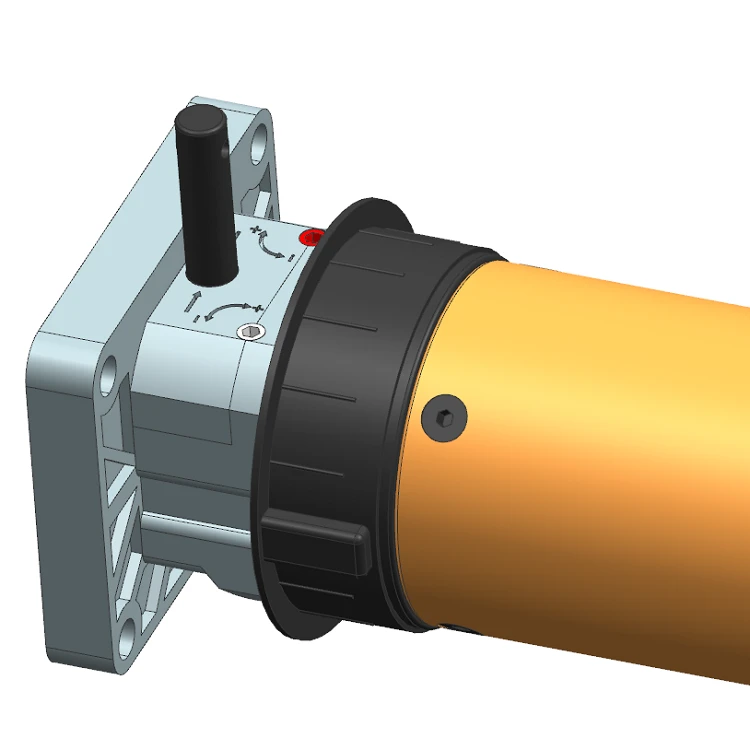

If you're looking for a motor with a manual override feature, our 92mm Manual Override Tubular Motor is the way to go. It also has an effective heat dissipation system to ensure long - term durability.
Let's Connect
If you're in the market for external Venetian blinds tubular motors, we'd love to talk to you. Whether you need more information about our products, want to discuss your specific requirements, or are ready to place an order, we're here to assist you. Contact us today to start the conversation.
References
- "Electric Motors and Drives: Fundamentals, Types and Applications" by Austin Hughes and Bill Drury.
- "Heat Transfer" by Frank P. Incropera and David P. DeWitt.


